


TL;DR
Indoor cycling delivers ten clinically-supported health benefits:
- Improved cardiovascular health and reduced heart disease risk
- Effective weight loss and calorie burn
- Increased lower-body muscle strength and endurance
- Better joint health with minimal impact on knees and hips
- Improved mental health: reduced depression and anxiety
- Enhanced posture and core stability
- Greater flexibility in the lower body
- Improved balance and proprioception
- Better coordination between upper and lower body
- Measurable gains in aerobic capacity (VO2 max)
Introduction: Why Indoor Cycling?
The top benefits of indoor cycling include improved cardiovascular health, effective weight loss, increased lower-body muscle strength, better joint health, and measurable improvements in mental wellbeing, all supported by peer-reviewed research. Indoor cycling (riding a stationary bike, whether a spin bike, smart trainer, or upright exercise bike) delivers these outcomes because it combines sustained aerobic demand with low-impact mechanics, making it accessible across fitness levels and age groups.
These ten benefits were selected because they are the most consistently documented outcomes in peer-reviewed research on indoor cycling specifically. Where the evidence is strong and the mechanism is well understood, we’ve gone deeper. Each benefit below is backed by at least one named, dated source, because “studies show” isn’t good enough when the science is this clear.
Whether you ride a smart trainer connected to Zwift, a studio spin bike, or a basic upright at home, the physiological benefits are largely the same. What matters is consistency, effort, and good form.
1. Improved Cardiovascular Health
Indoor cycling is one of the most effective tools available for strengthening the heart and reducing cardiovascular disease risk. A 2019 systematic review published in Medicina , which analysed 13 studies covering 372 participants, found that indoor cycling programmes consistently improved aerobic capacity (VO2 max) by 8–10.5% across participants exercising two to three times per week. The review concluded that indoor cycling “may improve aerobic capacity, blood pressure, lipid profile, and body composition” in a wide range of populations.
Blood pressure reduction is one of the clearest benefits. The same systematic review found a 4.3% reduction in systolic blood pressure after 12 weeks of indoor cycling, rising to an 11.8% reduction after 24 weeks when combined with dietary changes. According to the review authors, “the benefits of indoor cycling on reducing blood pressure are higher if the duration of training is longer.”
For context, a 2025 systematic review and meta-analysis published in Frontiers in Public Health (PROSPERO CRD42023443860) confirmed dose–response associations between exercise and cardiovascular disease risk factors in sedentary populations, reinforcing that regular aerobic activity like indoor cycling meaningfully reduces long-term cardiovascular risk.
The mechanism is straightforward: sustained pedalling raises heart rate, forcing the heart to pump more efficiently. Over weeks and months, this remodels the cardiovascular system, increasing stroke volume, reducing resting heart rate, and improving the elasticity of arterial walls. For anyone at risk of hypertension or heart disease, this makes indoor cycling one of the most evidence-backed lifestyle interventions available.
2. Effective Weight Loss and Calorie Burn
Indoor cycling is one of the most calorie-efficient forms of exercise, particularly for people who need a low-impact option. A typical 45-minute moderate-intensity indoor cycling session burns approximately 400–600 calories, according to data from the 2024 Compendium of Physical Activities. At vigorous intensity, this figure climbs considerably, with maximum-intensity cycling burning more than three times as many calories as light-effort cycling.
A 2024 study involving 50 adults found that 12 weeks of cycling (30–60 minutes, four times per week) produced an average weight loss of 5.5 pounds and a significant reduction in body fat percentage. The Medicina systematic review (2019) found that combined indoor cycling and dietary intervention produced approximately 10% reductions in body weight, compared to 2–3% with cycling alone, and critically, the exercise groups preserved muscle mass while diet-only groups lost it.
The afterburn effect (excess post-exercise oxygen consumption, or EPOC) adds further value. High-intensity interval training (HIIT) on the bike, alternating between hard efforts and recovery, has been shown to increase total calorie expenditure by 6–15% beyond the session itself, as the body continues to consume oxygen at a higher rate during recovery.
Practically, this means indoor cycling to lose belly fat is a realistic goal with consistent effort. The low-impact nature of indoor cycling also makes it more sustainable over time than high-impact alternatives like running, which reduces the dropout risk that undermines long-term weight management.
3. Increased Lower-Body Muscle Strength and Endurance
Indoor cycling primarily targets the quadriceps, hamstrings, glutes, and calves, the major muscle groups of the lower body. A 2024 randomised controlled trial published in Medicine & Science in Sports & Exercise (Epub September 2024) compared on-bike and off-bike resistance training in well-trained male cyclists over 10 weeks. The study found that high-intensity on-bike resistance training (performed against very high resistance at low cadences) was “an effective alternative to off-bike resistance training to safely increase strength, muscle-tendon structure, and cycling performance.” Notably, the off-bike group tended to show higher injury-related symptoms.
Cycling builds muscular endurance most reliably, specifically the sustained ability to produce force over time, particularly when resistance is increased for climbing efforts. Explosive power can also be developed through sprint intervals, which activate fast-twitch muscle fibres comparably to traditional leg press exercises. A study comparing four 30-second bike sprints to four sets of leg press found similar lower-body strength gains after five weeks in both groups.
For indoor cyclists, this means the resistance settings on your bike matter. Low resistance and high cadence primarily trains cardiovascular fitness; high resistance at moderate cadence builds muscular endurance and strength. Most well-structured indoor cycling programmes alternate between these modes, producing balanced adaptations across the cardiovascular and musculoskeletal systems.
The core musculature is also engaged during indoor cycling; the abdominals and obliques activate to stabilise the torso throughout each pedal stroke. A 2013 study in the Journal of Strength and Conditioning Research found considerable activation of the rectus abdominis and obliques during cycling, particularly during uphill and sprint efforts.
4. Better Joint Health and Low-Impact Exercise
Indoor cycling is one of the best exercises available for people with joint problems, particularly knee pain and early-stage osteoarthritis. A landmark 2024 study published in Medicine & Science in Sports & Exercise followed approximately 2,600 adults (average age 64) and found that people who cycled at any point in their lives were 17% less likely to experience knee pain and 21% less likely to develop osteoarthritis in the knee joint. The benefit was cumulative: the more periods of life a person spent cycling, the better their knee health outcomes.
The lead author, Dr Grace Lo, chief of rheumatology at the Michael E. DeBakey VA Medical Center, noted that cycling “can also be done indoors on a stationary bike” and described it as “a great preventative strategy for many things, including arthritis.”
The mechanism has two components. First, cycling is non-weight-bearing: the saddle supports body weight, dramatically reducing the compressive forces on the knee compared to running or walking. Second, the continuous circular motion of pedalling promotes the production of synovial fluid, which lubricates the joint and supports cartilage health. As Dr Joseph Garry, MD, explained: “The more the joint moves through its full range of motion, the more synovial fluid is produced.”
A 2025 review in Frontiers in Aging found that four weekly 20-minute sessions of moderate-intensity cycling produced a 29% improvement in pain scores for knee osteoarthritis patients, with high-intensity intervals producing a 41% improvement in total WOMAC (a validated joint health scoring tool) scores.
This makes indoor cycling particularly valuable for older adults, those returning from lower-body injuries, or anyone whose joints limit their ability to participate in higher-impact forms of exercise.
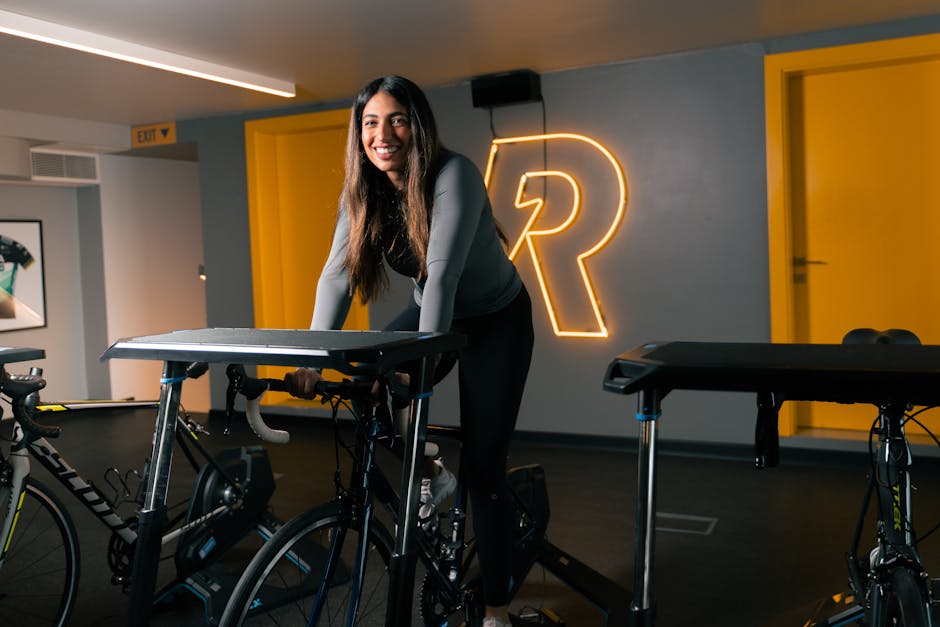
5. Improved Mental Health
Indoor cycling reliably improves mood, reduces anxiety, and can meaningfully reduce symptoms of depression. The mechanism is partly biochemical: sustained aerobic exercise triggers the release of endorphins, dopamine, and serotonin, the neurochemicals that boost mood and reduce the perception of stress. But the benefits go deeper than a simple endorphin rush.
A review of 26 years of scientific literature by the University of Toronto found that an inactive adult who exercises three times per week reduces their chance of developing depression by 19%. A large-scale study of over one million Americans, published in The Lancet Psychiatry, found that people who exercised reported 43% fewer poor mental health days compared to sedentary individuals. Cycling ranked second only to team sports in its mental health benefits in that study.
A 2024 study published in the International Journal of Epidemiology (Oxford Academic) established a causal link, not just a correlation, between cycling and reduced mental ill-health risk. A 2024 scoping review published in PMC (PMC11743510) further confirmed the positive impact of cycling on quality of life and mental health across populations including people with disabilities.
Indoor cycling specifically offers something outdoor cycling cannot always provide: a structured, controllable environment. Indoor platforms with performance tracking (power output, cadence, heart rate) create clear progress markers, which research associates with improved self-efficacy, a core component of psychological resilience. The ideal length for indoor cycling sessions for mental health benefits appears to begin at around 20–30 minutes, where endorphin release and cortisol reduction become measurable.
6. Enhanced Posture and Core Stability
Maintaining correct riding position on a stationary bike engages the core, including the abdominals, obliques, and deep spinal stabilisers, throughout every session. This continuous low-level activation, compounded over hundreds of hours of riding, produces meaningful improvements in core endurance and postural stability.
The American Council on Exercise (ACE) notes that low-impact exercises like cycling promote gentle spinal movement that enhances circulation and flexibility without overloading the spine. A study in the Journal of Physical Therapy Science found that maintaining proper cycling posture significantly reduced lower back pain by ensuring even distribution of spinal load.
Indoor cycling has an advantage over outdoor cycling here: on a static trainer, you cannot rely on the bike’s own movement to assist balance. The body must work actively to maintain position, increasing the postural and stabilising demand on the core. Proper foot positioning for indoor cycling is closely linked to posture: misaligned feet alter knee tracking and hip position, which cascades into the lower back and core.
A caveat worth noting: poor posture on the bike, or excessive time in a bent-over position, can shorten the hip flexors and contribute to anterior pelvic tilt. This makes proper bike fit and regular off-bike stretching important complements to the riding itself. When technique is sound, however, indoor cycling is well-supported as a tool for improving postural awareness and reducing lower back discomfort.
7. Greater Flexibility in the Lower Body
Regular indoor cycling progressively loosens the major muscle groups of the lower body, particularly the quadriceps, hamstrings, hip flexors, and calves. Each pedal revolution takes these muscles through a partial but repeated range of motion, which over time improves their elasticity and reduces chronic tightness.
This is especially relevant for desk workers, whose hip flexors and hamstrings are chronically shortened from prolonged sitting. Indoor cycling introduces consistent, low-intensity movement through these muscles without the eccentric loading (muscle lengthening under tension) that causes delayed onset muscle soreness in activities like running.
Cleveland Clinic’s health resources note that cycling is among the recommended exercises for improving lower-body flexibility, particularly for older adults or those recovering from musculoskeletal injuries. Exercise bikes are also used in physiotherapy settings specifically to improve joint range of motion and muscle flexibility following surgery or injury.
It is worth noting that cycling alone will not produce maximal flexibility gains; the range of motion on a stationary bike is constrained by the pedalling arc. Cyclists who supplement their riding with targeted stretching (hip flexor stretches, hamstring lengthening, calf work) consistently report better flexibility outcomes than those who ride without any additional mobility work.
8. Improved Balance and Proprioception
Maintaining a stable riding position on a stationary bike, particularly during standing climbs, jumps (transitions between seated and standing), or high-cadence efforts, requires and develops balance and proprioceptive awareness. Proprioception refers to the body’s ability to sense its own position in space, which underpins coordination and injury prevention.
During indoor cycling, the body continually micro-adjusts to maintain an efficient pedalling position, engaging the postural muscles and the proprioceptive feedback loops that connect the feet, hips, and core. Jump exercises (rapid transitions between seated and standing) are particularly effective at challenging balance and developing the neuromuscular control required for stable movement in everyday life.
A 2024 rehabilitation guide noted that exercise bikes play a crucial role in physiotherapy by improving blood circulation and flexibility, strengthening specific muscle groups, enhancing balance, and increasing endurance, particularly for patients recovering from lower-limb injuries where weight-bearing is contraindicated.
For older adults, balance training has significant fall-prevention implications. The importance of cardio for your fitness routine extends specifically to proprioception: aerobic exercise improves neuromuscular communication, which directly supports balance in daily movements like stair climbing and uneven terrain navigation.
9. Better Coordination Between Upper and Lower Body
Indoor cycling develops inter-limb and upper-lower body coordination through the sustained, rhythmic demands of the pedal stroke. Maintaining cadence, controlling resistance transitions, and coordinating breathing with effort all require and develop neuromuscular efficiency.
This coordination benefit is amplified in structured indoor cycling sessions that incorporate different riding positions, such as seated flat, standing climb, and seated sprint, each of which demands different patterns of muscle recruitment and timing. Over time, the body becomes more efficient at coordinating these patterns, and the improved neuromuscular communication transfers to other physical activities.
The rotational symmetry of pedalling also has a corrective function. Cyclists naturally develop an awareness of left-right power imbalances (one leg pushing harder than the other), and many smart trainers now measure and display this directly. Correcting these imbalances improves overall movement symmetry, which reduces overuse injury risk in other activities.
For beginners, the controlled environment of indoor cycling, with no traffic, no terrain changes, and consistent resistance, makes it an excellent environment to develop movement confidence and coordination without the added cognitive load of outdoor riding.
10. Measurable Gains in Aerobic Capacity (VO2 Max)
VO2 max, the maximum rate at which the body can consume oxygen during exercise, is one of the strongest predictors of long-term health and longevity. A higher VO2 max is associated with lower all-cause mortality, lower cardiovascular disease risk, and better metabolic health across the lifespan.
The Medicina systematic review (2019, PMC6722762) found that indoor cycling programmes produced VO2 max improvements of 8–10.5% across all six studies that measured this outcome, with sessions averaging two to three times per week. These gains were consistent regardless of participants’ starting fitness levels.
A 2024 PMC study (PMC7727675) found that 12 weeks of indoor cycling produced significant improvements in VO2 peak, body composition, and lipid metabolism in both obese and normal-weight women, confirming that aerobic capacity gains from indoor cycling are not limited to unfit populations.
Practically, the relationship between watts and speed on a stationary bike is one of the clearest measures of improving aerobic capacity: as VO2 max increases, a cyclist can sustain higher power outputs at the same or lower perceived exertion. Tracking this over months provides an objective window into cardiovascular fitness development.
Frequently Asked Questions
Is indoor cycling as effective as outdoor cycling for health benefits?
For cardiovascular and metabolic health benefits, indoor cycling is comparable to outdoor cycling, and in some respects superior. The 2019 Medicina systematic review found consistent improvements in VO2 max, blood pressure, and body composition from indoor-only cycling programmes. The key difference is environmental stimulation: a 2024 randomised crossover trial published in PMC (PMC11503324) found that outdoor cycling produced higher enjoyment and motivation scores than indoor cycling with virtual or enhanced reality overlays. However, the physiological outcomes were similar at matched intensities. Indoor cycling removes barriers like weather, traffic, and terrain variability, which supports consistent training, and consistency is the primary driver of long-term health benefits.
How often should I do indoor cycling to see health benefits?
The Medicina systematic review found significant improvements in cardiovascular and metabolic markers with two to three indoor cycling sessions per week over 12 weeks. For mental health benefits, research suggests that sessions of 20–30 minutes at moderate intensity (raising the heart rate to 60–75% of maximum) are sufficient to trigger endorphin release and cortisol reduction. For weight loss, four sessions per week of 30–60 minutes, as used in the 2024 weight loss study, produced an average loss of 5.5 pounds over 12 weeks without dietary changes. The optimal frequency for most people is three to four sessions per week, which balances stimulus and recovery.
Is indoor cycling safe for people with knee pain or arthritis?
Yes, for most people with knee pain or early-stage osteoarthritis, indoor cycling is not only safe but actively beneficial. The 2024 Medicine & Science in Sports & Exercise study found that cyclists were 21% less likely to develop knee osteoarthritis than non-cyclists, with the benefit increasing with cumulative cycling exposure. The non-weight-bearing, low-impact nature of cycling makes it one of the exercises most frequently recommended by rheumatologists for people with joint conditions. Dr Grace Lo, lead author of the 2024 study, specifically confirmed that stationary bike cycling provides the same joint-protective benefits as outdoor cycling. People with severe or acute knee conditions should consult their GP or physiotherapist before starting a programme, but for most, a gentle start at low resistance with a properly fitted bike is both safe and therapeutic.
Does indoor cycling help with belly fat specifically?
Indoor cycling is effective for overall fat loss, including abdominal fat, when combined with appropriate dietary habits. The Medicina systematic review found that combined indoor cycling and dietary intervention produced approximately 10% reductions in body weight, with the exercise component specifically preserving muscle mass. A 2024 study found that 12 weeks of four-times-weekly cycling produced measurable reductions in waist circumference and total body fat. Cycling alone will not spot-reduce belly fat, and no exercise does, but as a sustained calorie-burning activity that also regulates hunger hormones (leptin and ghrelin), indoor cycling is one of the most practical tools for achieving and maintaining a healthy body composition.
Summary: The Case for Indoor Cycling
Ten benefits. All of them evidenced. All of them achievable on a stationary bike in your home or gym, regardless of weather, fitness level, or available time.
The strongest case for indoor cycling is its accessibility combined with its breadth of effect. No other single exercise delivers meaningful cardiovascular, metabolic, musculoskeletal, and mental health benefits with so little injury risk. The 2019 Medicina systematic review remains the most comprehensive evidence base for indoor cycling specifically, and its conclusion is unambiguous: indoor cycling improves aerobic capacity, blood pressure, lipid profiles, and body composition across a wide range of populations.
Start at a frequency and intensity that feels manageable. Track your progress. Increase resistance before duration. And if you’re unsure where to begin, the is indoor cycling good for you? guide covers the fundamentals in depth.