

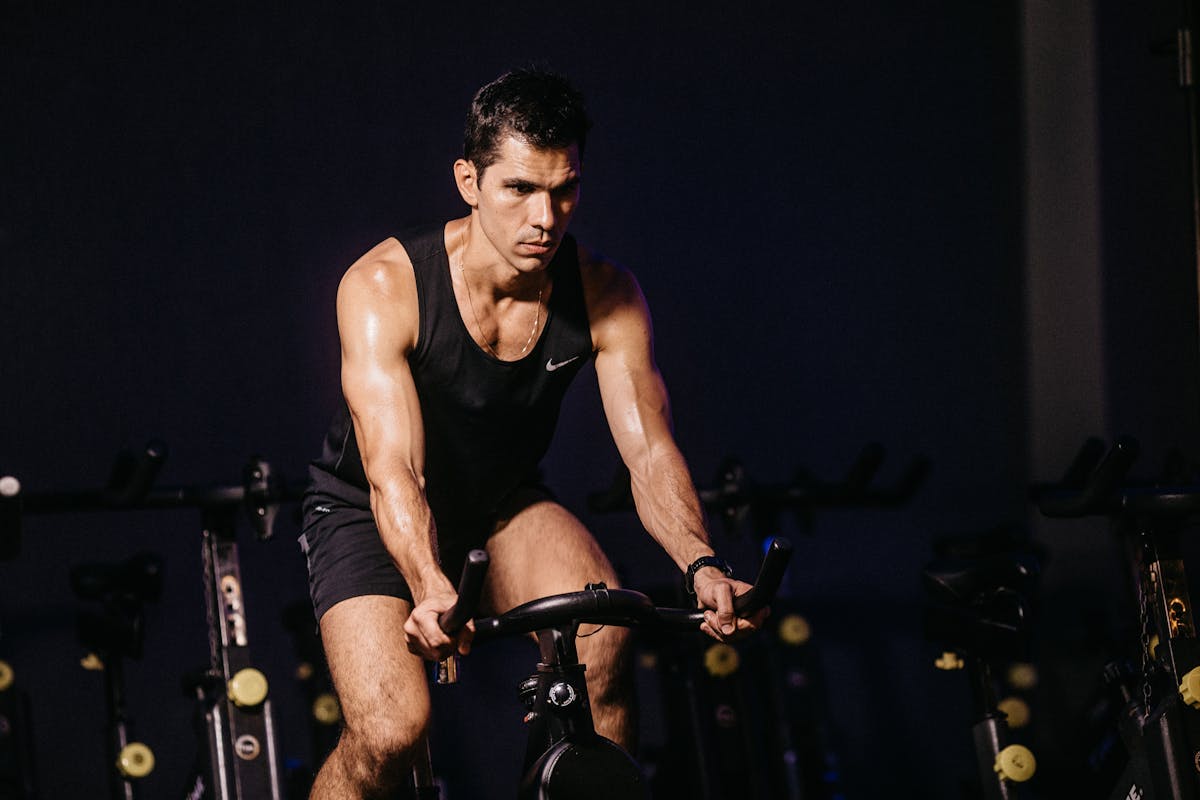
AI training tools for indoor cycling use machine learning algorithms to analyse your power output, heart rate, and workout history, then adjust your training plan in real time. Rather than following a fixed schedule, the software decides what workout you should do next based on how your body has actually been responding. That distinction matters more than it sounds.
TL;DR
- TrainerRoad’s Adaptive Training and AI FTP Detection can set your training zones without a formal fitness test, and update them after every ride
- Garmin Cycling Coach (launched November 2024) adjusts daily workouts based on your recovery and health metrics
- Zwift started rolling out AI-driven personalised recommendations in late 2025
- Wahoo SYSTM’s 4DP profiling is thorough but has no adaptive engine — your plan stays fixed once set
- WHOOP and Garmin wearables use algorithms to estimate daily readiness, which feeds into training decisions
- The tech is genuinely useful for time-crunched riders who can’t hire a coach. It is not a replacement for listening to your own body
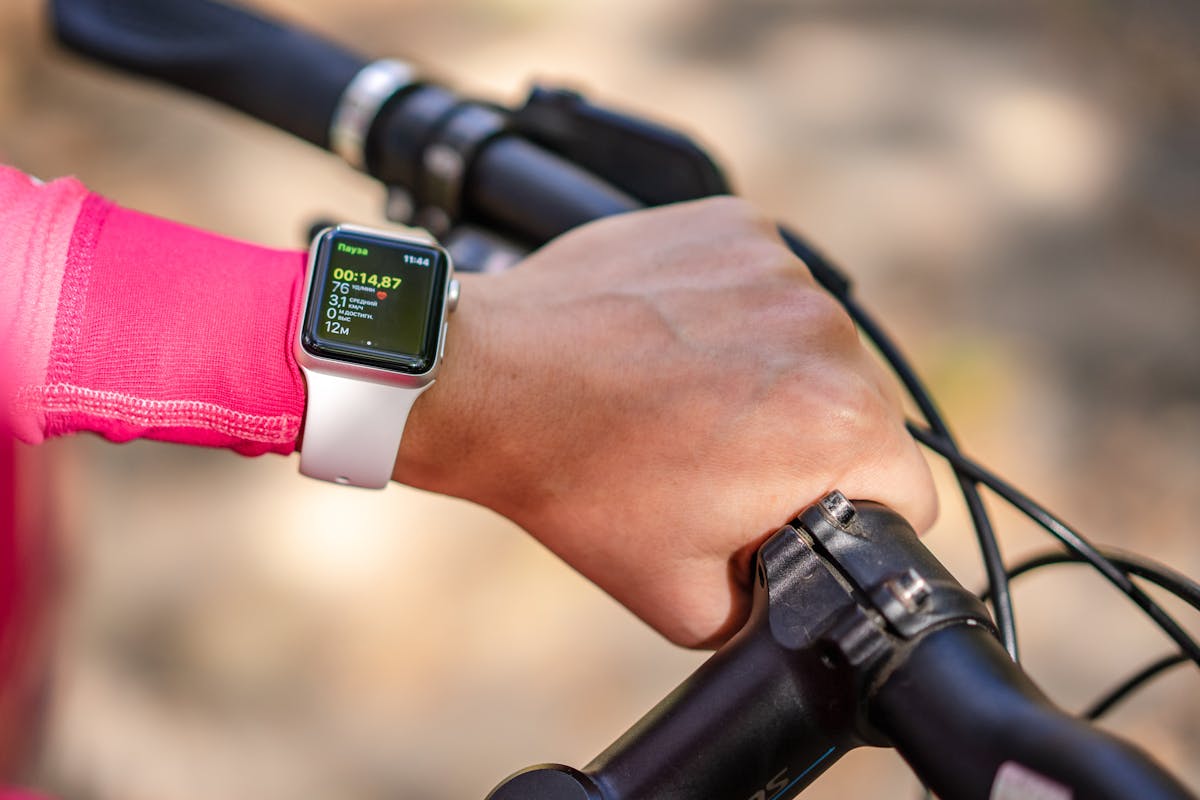
What “AI Training” Actually Means in Practice
When apps say “AI”, they usually mean one of two things: a machine learning model that analyses patterns in your historical data to predict what training load you can handle next, or an algorithm that adjusts a pre-built plan based on how you respond to each session. Sometimes it’s both. Sometimes it’s neither, and “AI” is just a marketing word on a scheduling tool.
The apps that do this well share data from millions of athletes, not just yours. TrainerRoad has collected workout data from hundreds of thousands of users over years. That scale is what makes their AI FTP Detection credible. As TrainerRoad’s Nate Pearson explained in a January 2026 forum post , the updated AI model doesn’t even use FTP as an abstraction: it sees raw power and heart rate data, then figures out the next best workout from there. One user in that thread reported their AI-detected FTP went from 285W to 306W. They were sceptical, but completed the harder workouts successfully.
That is the gap genuine adaptive training fills. Most riders underestimate their capacity when guessing FTP from a ramp test on a bad day. A model trained on your last 30 workouts will often be more accurate than you are.
TrainerRoad: The Most Developed AI Coaching System for Indoor Cyclists
TrainerRoad’s Adaptive Training is a system that adjusts your workouts based on Progression Levels: a 1-10 scale for each training zone (endurance, tempo, sweet spot, threshold, VO2max, anaerobic, sprint). After every completed workout, the system updates your levels across zones and may suggest modifications to upcoming sessions.
AI FTP Detection, launched in early access in February 2022 and significantly updated in January 2026, runs after every ride. You never need to do a ramp test. The model looks at your power and heart rate data from recent workouts and calculates where your threshold likely sits. For riders who find formal testing stressful or time-consuming, this alone is a meaningful change to how training fits into a real week.
The limits are real, though. If you train across multiple platforms (say, Zwift for group rides plus TrainerRoad for structured work), the model only sees what’s in TrainerRoad. Users on the TrainerRoad forum noted that the AI doesn’t distinguish between a power-meter-calibrated ride and a turbo trainer reading from three years ago. Data quality matters, and inconsistent equipment will confuse it.
My take: TrainerRoad’s adaptive system is the most practically useful AI training feature available for structured indoor cycling right now. The Progression Level system tells you, concretely, whether you’re getting better at each zone. That beats a single FTP number for understanding where your fitness actually stands.
Garmin Cycling Coach and Wearable-Based Adaptation
Garmin Cycling Coach is a plan-building tool added for cyclists in November 2024 (Garmin press release, November 2024). It works differently from TrainerRoad: instead of adapting to your performance inside a training platform, it generates a structured plan and updates daily workouts based on your recovery, sleep, and health metrics from a Garmin device. If you crushed yesterday’s ride, tomorrow’s session increases. If your recovery score dropped because you slept badly, it backs off. Cyclists can also see how their current fitness maps to the demands of a target event, including elevation gain. That course-specific pacing context is something most generic coaching apps don’t offer.
WHOOP takes a different approach again. It focuses on readiness rather than specific workouts. Each morning you get a Recovery score (0-100%) and an optimal Strain range for the day. The Strain algorithm uses your heart rate throughout the entire day, not just during workouts. A Cyclingnews three-year review of WHOOP 4.0 (January 2025) found the Strain and Recovery scores tracked reliably with perceived effort in most cases. The reviewer did note that the AI coach “missed some key trends” in the data. WHOOP’s sleep staging accuracy has been independently measured at roughly 82-85% against polysomnography (askvora.com, March 2026), which is reasonable for a consumer wrist device, but not a precise clinical instrument.
The practical value of wearables like WHOOP and Garmin in an AI training context is that they add a recovery layer training apps alone can’t see. TrainerRoad doesn’t know you slept four hours. Your Garmin does.
Zwift and Wahoo: Different Approaches, Very Different Results
Zwift announced AI-driven personalised recommendations in September 2025, with a beta rollout beginning November 2025 (Zwift newsroom, September 2025). The system accounts for recent training load from both indoor and outdoor riding, your preferences, and your goals, then serves up a suggested session when you open the app. You can filter by workout type, route, or event, and adjust the duration. For Zwift users who spend more time scrolling the workout library than actually riding, this cuts decision fatigue.
What Zwift hasn’t built yet is anything like TrainerRoad’s adaptive plan adjustment. Personalised recommendations is closer to a smart content feed than a coaching system. You’re being pointed toward appropriate workouts, not being coached toward a goal by a model tracking your physiological response.
Wahoo SYSTM is the honest counterexample. Its 4DP (Four-Dimensional Power) testing protocol is one of the most thorough fitness assessments in consumer cycling apps: it measures neuromuscular power, anaerobic capacity, maximal aerobic power, and threshold. But once you have your profile, SYSTM gives you a fixed plan. There is no adaptive engine. If you miss a week, you adjust manually. A July 2025 thread on the Wahoo forum was titled “Lack of adaptive training makes me switch from SYSTM”, and the replies showed this is a consistent frustration. Several users specifically cited TrainerRoad’s AI as the reason they left.
That’s not a knock on the quality of SYSTM’s workouts. Many are genuinely excellent. But on the specific question of AI-driven adaptation, Wahoo is behind, and has been for a while. If you need your training plan to flex around a busy life, SYSTM will not do that for you.
If you’re weighing your platform options, the Best Free Zwift Alternatives in 2026 covers the broader app landscape including platforms with more coaching depth.
What Actually Changes for a Regular Rider
The honest answer: less than the marketing suggests, and more than the sceptics admit.
Before adaptive AI training, the standard approach for a self-coached rider was: pick a structured plan, do the ramp test, follow the schedule, adjust manually when life got in the way. That process worked, but the adjustment part was the weak link. Most riders either ignored plan deviations (“I’ll just pick up where I left off”) or dropped back to week one, which often meant weeks of under-stimulus.
What adaptive training actually fixes is that adjustment problem. Skip a week? The system reduces your upcoming training load proportionally. Nail a VO2max session? The next one increases in difficulty. That closed feedback loop is something a fixed plan can’t replicate without significant manual tinkering.
For a rider putting in three to four sessions a week on a smart trainer, the practical upshot is this: you spend less time thinking about whether today’s session is appropriate for where you are, and more time just riding. Whether that translates to better fitness outcomes depends heavily on your starting consistency. AI won’t fix a 30% ride adherence rate. But for riders who are already fairly consistent, it removes a real source of friction.
Indoor cycling is already a solid tool for structured training. If you’re curious about why the investment is worthwhile from a health perspective, the evidence for indoor cycling’s health benefits is worth reading through. And for context on what the effort actually burns, calorie estimates by weight and intensity give you a realistic baseline.
Where the Technology Falls Short
There are a few things AI training tools don’t handle well. Worth being direct about them.
Data dependency. Every AI training system is only as good as the data going into it. If you have inconsistent power measurement (different trainers, uncalibrated hardware, some rides on a dumb trainer with no power), the models are working from noisy inputs. TrainerRoad’s AI FTP Detection is calibrated on workout data within the platform. Use a different power meter on outdoor rides and those data points won’t feed the model.
Recovery is still partly estimated. WHOOP’s 82-85% sleep staging accuracy is reasonably good, but the 15-20% of misclassified sleep stages have downstream effects on Recovery scores. Garmin’s HRV-based readiness scores are similarly estimated rather than clinically measured. These systems are useful guides, not precise instruments.
They can’t measure life stress. A week of difficult work deadlines, a sick kid, a long interstate drive: none of that shows up in your power data or your heart rate from last night’s sleep. A good human coach would ask how you’re feeling. The app doesn’t know to ask.
Overreliance is a real risk. Several users in TrainerRoad forum threads noted they’d stopped thinking critically about their own training because the app handled it. That’s fine when the app is right. When you’re accumulating fatigue across a busy week and the algorithm is still calling for high-load sessions, trust your body over the screen.
The academic evidence on AI-driven fitness personalisation is encouraging but limited. A 2024 PMC scoping review of 15 studies on AI-driven physical activity solutions (899 participants) found moderate certainty of effectiveness for increasing physical activity. Most studies ran for only 6-12 weeks. Longer-term evidence for AI-specific training adaptation in cyclists is thin.
Frequently Asked Questions
Does TrainerRoad’s AI FTP Detection actually work?
Based on user reports and forum data, it works well for most riders who train consistently inside the TrainerRoad platform with reliable power measurement. The January 2026 update moved away from an FTP abstraction entirely: the model now reads raw power and heart rate to determine the right next workout. One user reported a 21W FTP increase detected by the AI, completed the prescribed workouts, and rated them appropriately hard. The caveats: inconsistent power data or short training history inside the app will reduce accuracy, and there is no independent peer-reviewed study of the detection accuracy for the current model.
Is Wahoo SYSTM adaptive?
No. SYSTM uses a thorough fitness assessment (the 4DP Full Frontal test) to profile your power across four dimensions and generates a training plan from that profile. The plan is fixed once assigned. If your fitness changes, you run the test again. If you miss sessions, you adjust the plan manually. As of mid-2025, Wahoo has not released an adaptive training engine to rival TrainerRoad’s system.
Do I need a WHOOP or a Garmin to use AI training effectively?
No. TrainerRoad’s adaptive system works purely from power and heart rate data within rides. It doesn’t require a separate recovery wearable. A WHOOP or Garmin adds a recovery layer (sleep data, HRV, overnight physiology) that training platforms don’t have on their own. That context is useful, but it’s an addition rather than a requirement. Start with the training app and add the wearable later if you want the full picture.
Can Zwift’s AI replace a coaching app like TrainerRoad?
Not yet. Zwift’s AI Personalised Recommendations, launched in beta in November 2025, suggests appropriate workouts based on your recent training history and goals. That’s useful for reducing decision fatigue. But it’s not a coaching system. It doesn’t build progressive training blocks, track zone-specific progression levels, or adapt your plan around recovery. If goal-focused structured training is your priority, a dedicated training app is still the better call.
What’s the main limitation of AI cycling coaching?
The biggest gap is life context. Every AI training system works from physiological data: power, heart rate, sleep metrics. None of them know you’re stressed about work, coming down with a cold, or travelling across time zones. Riders who get the most from adaptive training stay honest with themselves, override the app when something feels wrong, and treat the AI’s suggestions as informed defaults rather than rules.